
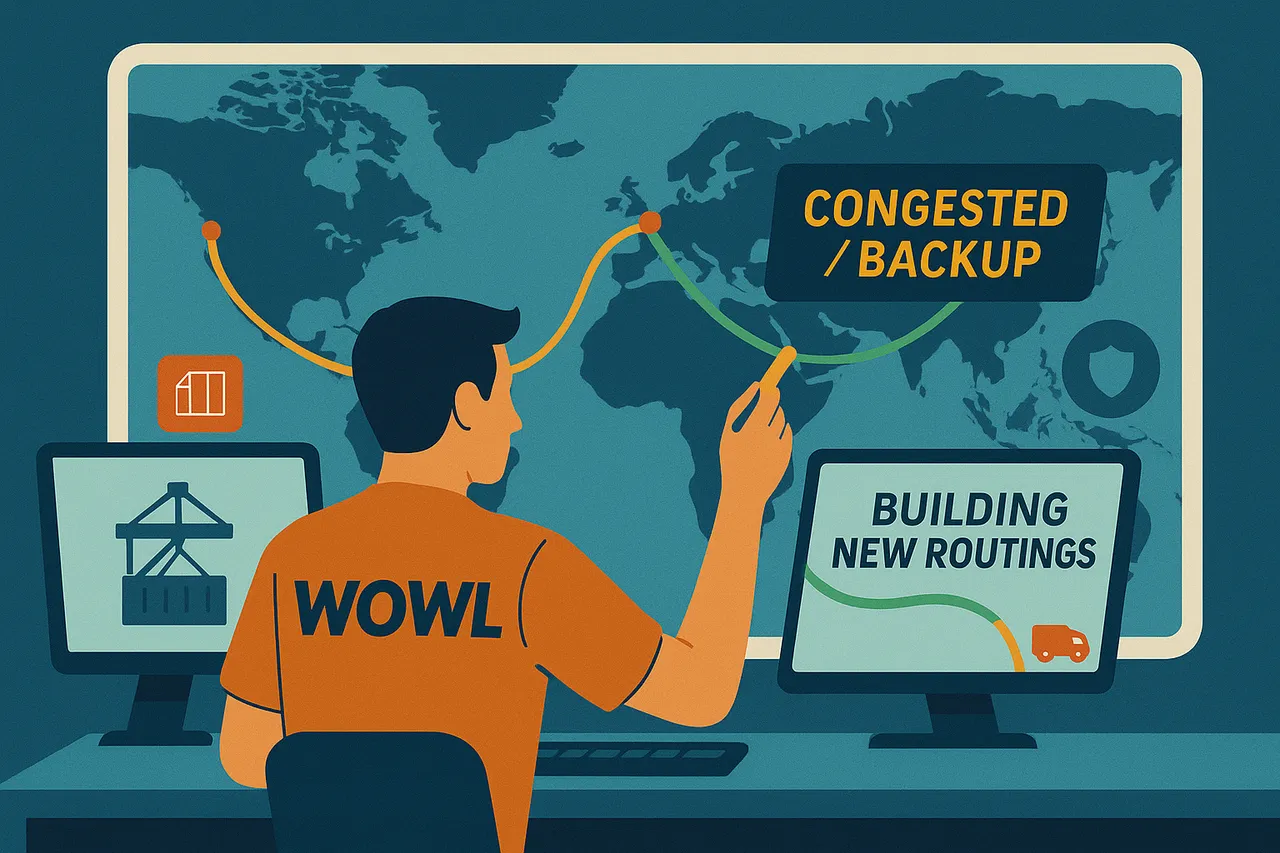
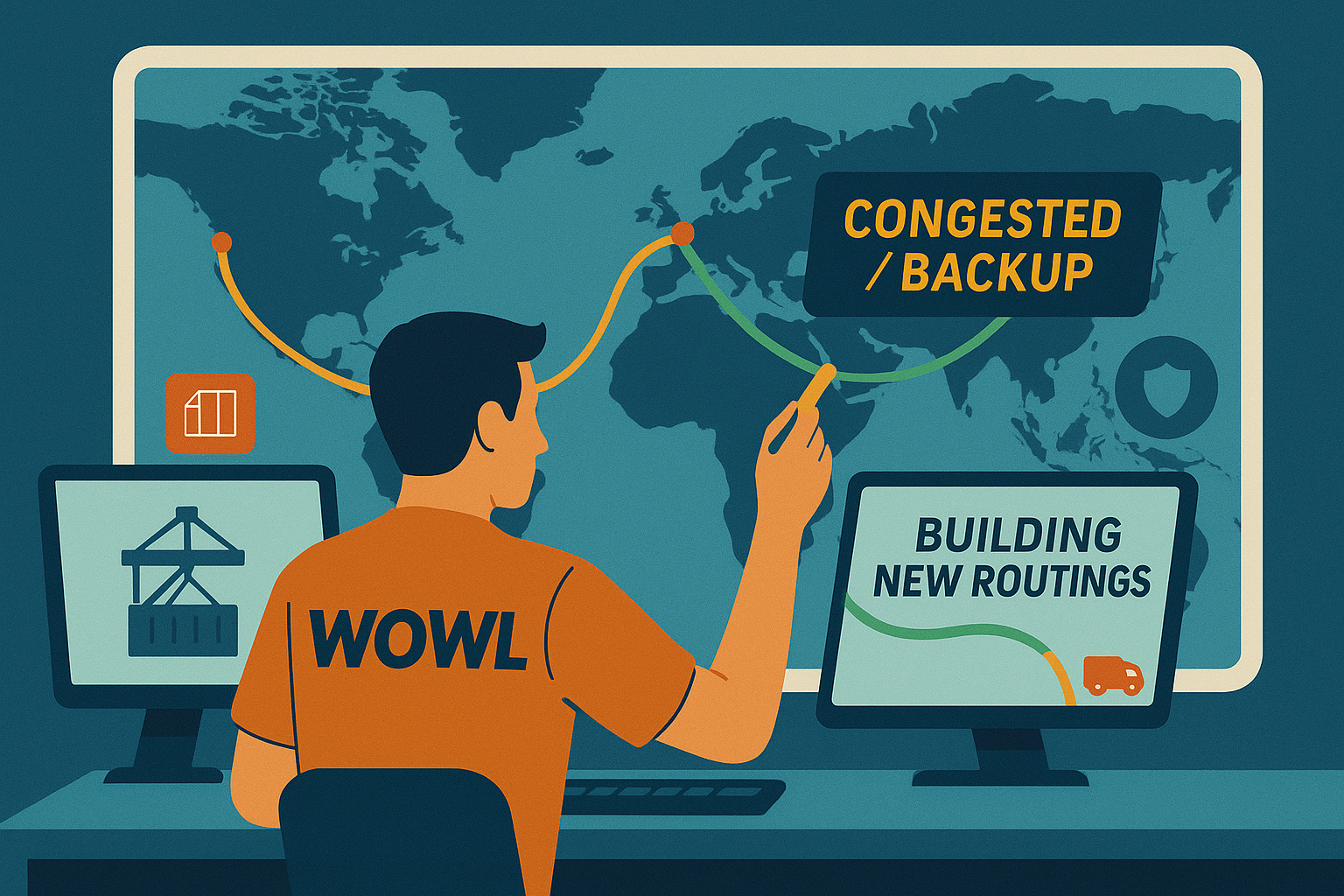

When carriers start shifting back from the long Cape of Good Hope detour to the Red Sea and Suez, the big story won’t be “great, transit times are shorter again.”
The real story is the switchover – a messy stretch when some ships still sail around Africa while others cut back through Suez. Eastbound and westbound vessels will converge on Europe, the Med, North Africa, and parts of the Americas in the same calendar windows. That’s where things get interesting… and risky.
What the changeover will look like
As Suez reopens in a real way, expect:
- Mixed routings – Suez vs. Cape at the same time
- Ships snapping from +12–18 days back to “normal” speeds
- Heavy arrival bunching in Europe / Med / North Africa
- Also, bunching on the East Coast ports of Americas as SE Asia & India/ME flows shift back through Suez, while Panama and West Coast–rail keep running
- Feeders, yards, and trucking stretched by overlapping calls
In plain terms, we’re trading long and predictable for shorter and jumpier until the dust settles.
How long will the noise last?
- No real “normal” in the first month
- 2–3 months of noise, bunching, and loop re-timing
- 3–4 months, maybe longer, before flows, feeders, labor, and schedules feel steady again
What choices you’ll actually have
Different carriers and alliances will move at different speeds. That gives you options:
- Mix early Suez services with later Cape services – built-in hedge
- Decide lane by lane: fastest ETA vs. avoiding peak arrival weeks
- Shift part of your East Coast Americas destination volumes over to Panama or WC–intermodal to dodge port bunching
- Where it fits your network, consider alternate discharge ports or inland ramps on gateways that get overloaded
How to prepare beyond routing
A few sharp moves now can make the switchover survivable instead of chaotic:
- Change contracts with multi-gateway flexibility and clear surcharge rules
- Extra inventory on critical SKUs; pre-set container priority when ships stack up
- Drayage, DC staffing, and yard space lined up for “surge days”
- A simple playbook: triggers, decision owners, and one shared view of ETAs, TEUs, and at-risk orders
This is exactly where WOWL earns its keep: knowing which carriers and alliances are doing what, when they flip back to Suez, and building routing plans that match each client’s risk and service needs. Once freight is on the water, visibility and real alternatives—ports, services, inland paths—are the edge you need to ride out the lumpy months and come out stronger when the network finally settles.

