

Container shipping rarely blows up from one mistake—it’s death by a dozen dropped balls. When the "ball" does drop, even a few days storage charges can rack up over a $1,000 of demurrage penalties. And it can get much worse.
On a “normal” ocean move you’re counting on many parties involved to hit their assignments including the carrier, terminal, a forwarder, the trucker, documentation teams, and the customs broker. When any one of them misses a handoff, it’s usually not them who pays for it.
It’s you.
The bill shows up fast: demurrage, detention/per diem, storage, re-handling, amendments, rollovers. And the real gut-punch is late delivery—your customer doesn’t care who fumbled; they only see that you missed.
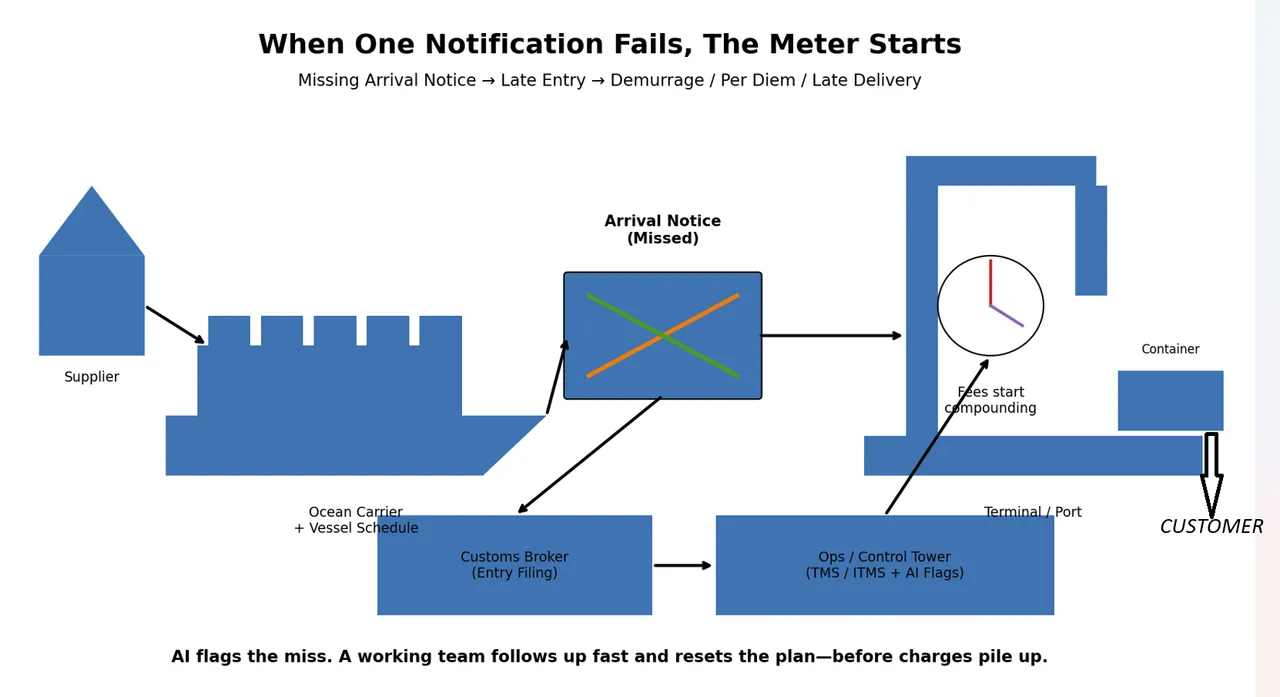
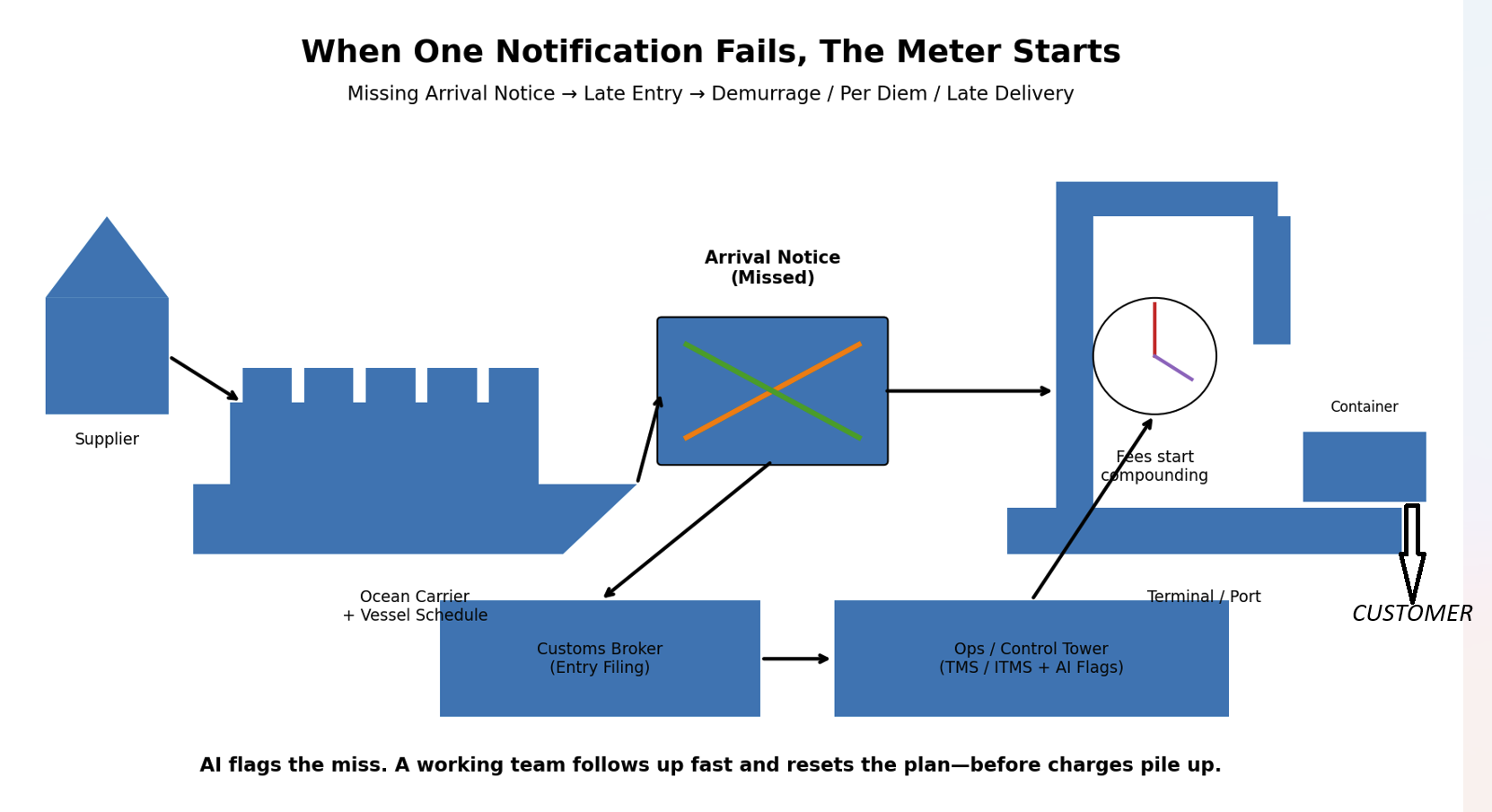
A late (or missing) Arrival Notice is a perfect example of a small failure with expensive consequences.
The Arrival Notice happens when the ocean carrier notifies the parties needing to know when a particular vessel is to arrive at destination port. It gets them all started with the information they need to be ready for the vessel.
For the BCO/importer, this is information their Customs Broker needs to make sure the customs entry is done ontime - that means before the arrival. That the shipment is cleared and ready to move off the port terminal as soon available. No hickups from Customs.
The customs entry process needs runway. The broker needs this notice 8–10 days before the vessel arrival/ETA to be able to file the entry and get it "cleared" by the customs agency and preferably about five days before.
Classification, PGA screening, holds, and document mismatches don’t get solved cleanly in the final 48 hours. A secondary Arrival Notice should also hit your ops desk or control tower so your team can validate ETA, align drayage, and manage the plan in the TMS.
But even with top-tier ocean carriers, the Arrival Notice sometimes doesn’t go out, goes out late, or goes to the wrong party. When that happens, entry often doesn’t start until the vessel is alongside and containers are discharging. Then you’re sprinting—calling the dray-carrier, chasing the broker, scrambling for paperwork—while the clock keeps ticking.
Major ports typically give only 3–4 days of free time. After that, the per diem clock starts ticking. Demurrage starts at $200–$300 per day, every day. Miss a few days and you’re staring at $1,000+ hit. And yes it can get worse. I have seen demurrage charges reach into the tens of thousands of dollars for a few "forgotten" containers. Try to explain that to your leadership.
The fix isn’t just hoping! It’s oversight of all the providers, of all the processes.
You need an operating model that treats “Arrival Notice not received on time as an exception—automatically flagged, escalated, and chased. That’s where a strong ITMS with AI-driven red flags earns its keep, paired with a real seasoned team on the job: who jump is as needed, confirm brokers, pressure the right carrier contacts, and reset the plan fast.
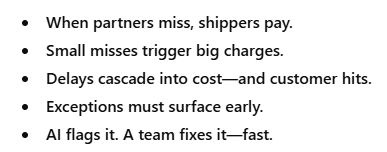
AI detects the miss and starts prodding providers directly. Control tower closes the loop—so shipments are back on track fast, before the fees and late deliveries become your problem.
This is what WOWL is. WOWL.io
#OceanFreight #Importers #CustomsBrokerage #Perdiem #ControlTower #TMS #OriginManagement

