

As the Middle East is in conflict again, you know you can’t run ocean logistics from one time zone! Even when the world is calm, you can’t run global logistics from one office location!
If you’re trying to manage global containers with a tiny HQ team, you’re not “lean”—you’re late.
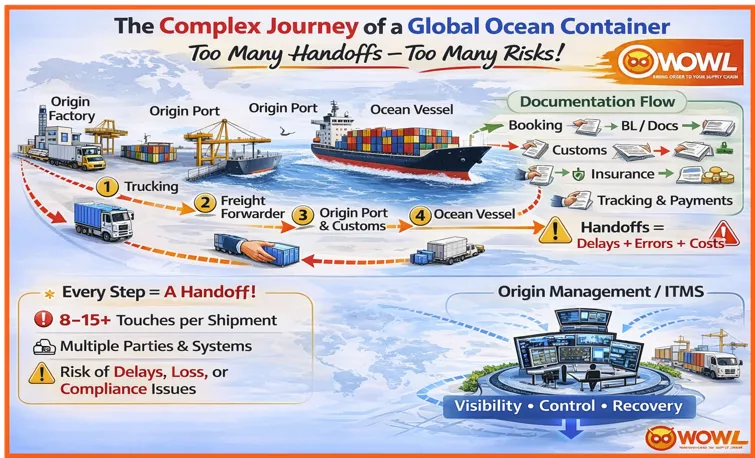
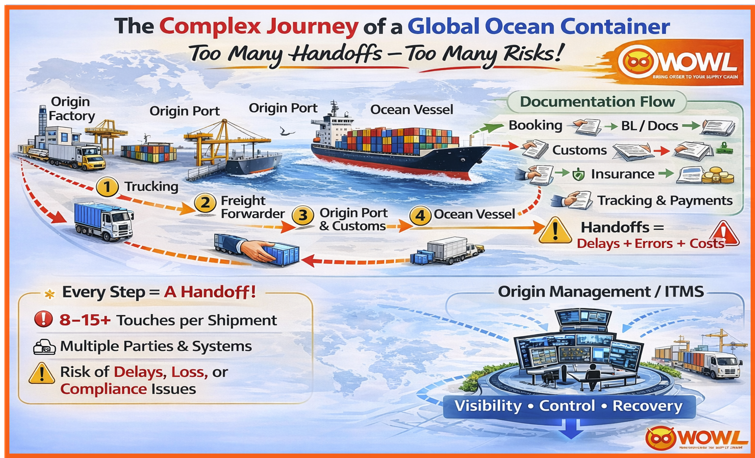
There are too many touches, handoffs both of your cargo and of the information & documents required. There can be easily 12 to 15 different entities, different organizations involved with moving just one container. You only hired a few of those.
And now, as conflict risk flares around major sea lanes, carriers won’t wait for your Monday morning call. They reroute, omit port calls, and sometimes discharge into ports of convenience to protect schedules and equipment flow. That can leave containers stranded longer than planned, triggers demurrage/detention exposure, and forces fast decisions on prioritization, transloading, alternate gateways, or customer allocations. In that moment, a two-person team at headquarters can’t keep pace—because the freight is moving (or stopping) while you’re asleep.
I’ve watched logistics orgs shrink for decades: 25–30 people in the 1980s became 15 in the 1990s, then 10 in the early 2000s. Now three or four people can be considered “fully staffed,” even for large shippers. The problem isn’t work ethic—it’s physics. Global freight runs 24/7, and exceptions multiply across time zones.
Downsizing costs response time. With limited coverage, an issue at origin might take a day to be seen, another day to gather facts, another to propose options—then more time for carrier replies and internal approvals. What should be solved in hours turns into five working days. Meanwhile production waits, customer service takes heat, sales escalate, and finance wonders why inventory and cash are drifting off plan.
A real global team isn’t about headcount—it’s about coverage, competence, and authority. Follow-the-sun support (North America working alongside Asia, with regional reach in Europe/ME/LatAm) shortens the loop: pull documents, challenge exceptions, rebook, split shipments, prioritize “hot” boxes, and communicate a credible recovery plan.
AI? AI is helping and is getting better and better. But are you ready for AI to make the final decisions for you and your company, without you?
And that team must be blended. Internal leaders set strategy and escalation; external partners provide depth. Fractional specialists—drayage management, duty drawback, freight audit, trade compliance—may only need 5–10 hours a week or a few days a month, but they prevent costly errors and protect service.
Bottom line: ocean logistics runs on speed and judgment—and that requires a global team.
This is what WOWL is about!
#ITMS #originmanagement #POmgmt #globalLogistics #OceanTransport

