

From the Conference Floor to Global Chokepoints and Chaos again!
Back in February, with high hopes and sunny horizons the Manifest and TPM26 conferences both opened. All was good.
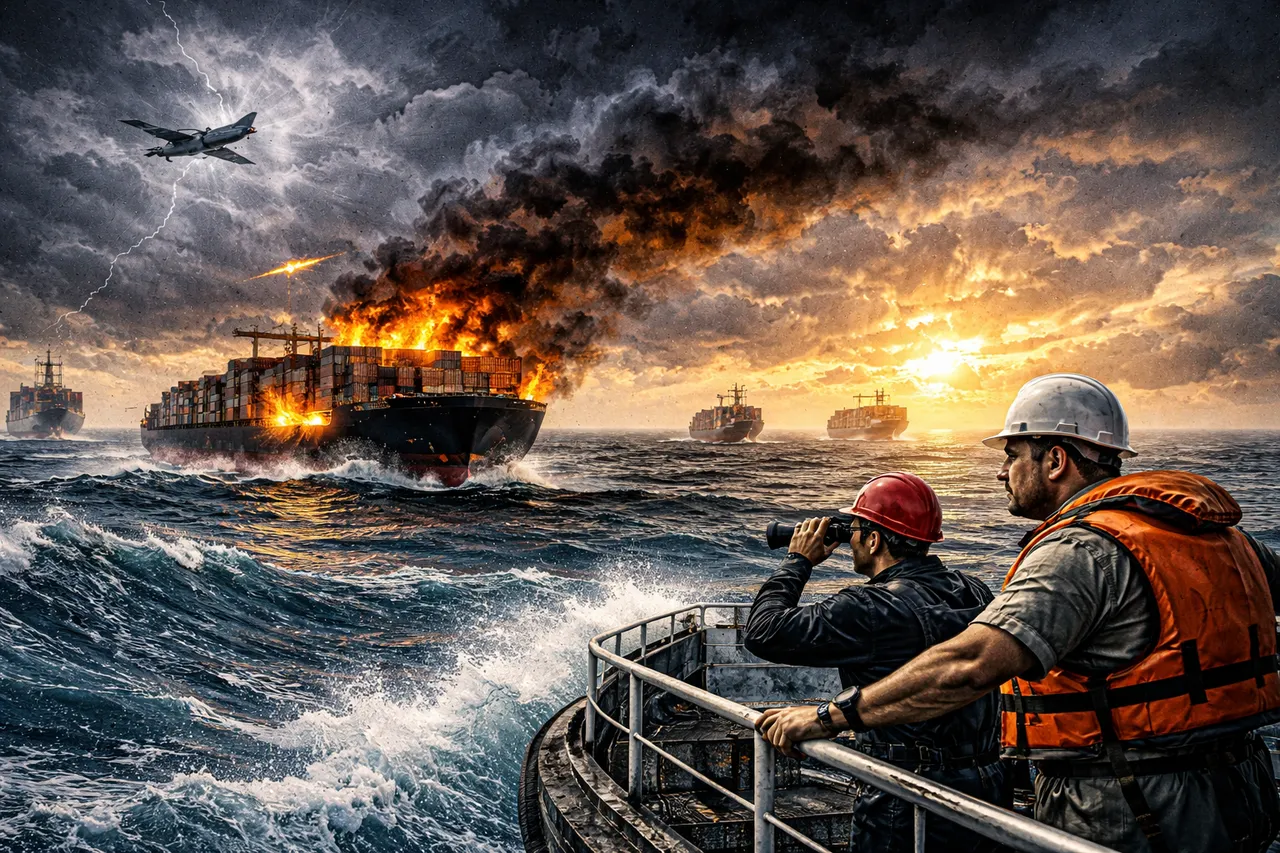
Then, escalation of a major conflict starting with Israel and the US with Iran has plunged that part of the Middle East into chaos, which is now rippling across world transportation networks, disrupting ocean shipping, raising costs, and placing innocent lives directly in harm’s way.
Only weeks ago, many of us were increasingly optimistic of more routings through the Red Sea/Suez was finally within reach. Now that optimism has crashed!
Fighting tied to Iran and the wider region has put the Strait of Hormuz, Persian Gulf, and the Gulf of Oman, under intense pressure, creating new risks for crews, vessels, cargo, and insurers. The greatest concern is for the lives at risk in the region while the commercial impact is quickly spreading globally.
For container shipping, the immediate effect is reduced carrier ability in moving cargo through or near the conflict zone. Some ships are still operating, but many carriers and insurers are taking a far more cautious approach. That has already created severe disruption for cargo bound for Gulf destinations, including the growing use of “end voyage” decisions where containers are discharged at a safe hub port rather than carried to final destination. In those cases, the burden shifts to the shipper to arrange onward trucking, storage, customs handling, and equipment return, often at significant unexpected cost.
The global effects may prove even larger. With the risk in the region so high and fears of renewed Red Sea attacks grow, most are reverting to the longer routings around Africa again. That means longer transit times, tighter vessel capacity, schedule disruption, and more pressure on already complex supply chains.
Fuel is another major concern, a global one!
Since before the fighting began on February 28, bunker fuel increases have been drastic and uneven, with VLSFO rising roughly 60% to nearly 100% depending on the hub. That kind of increase turns bunker from one of the largest ship operating costs into an even stronger driver of surcharges and higher freight rates.
Here are other likely new costs or penalties you may be impacted by:
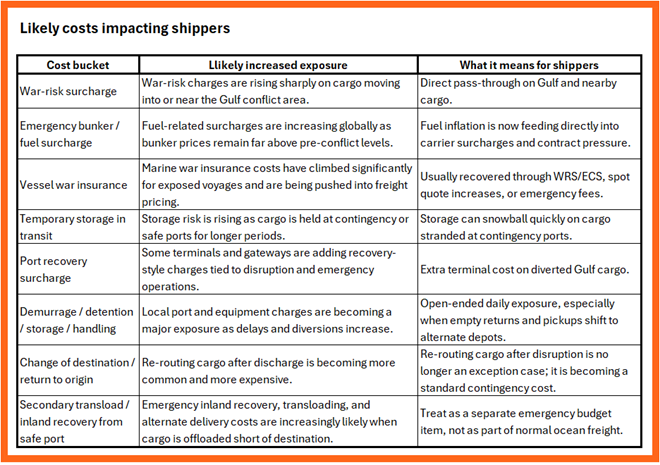
The lesson for shippers is clear: flexibility is never optional. Contingency planning, alternate routings, indexed bunker protection, and close coordination with carriers are critically essential. As soon as you forget this, you will get burned. In our markets, resilience, and robust flexibility are not just for discussion. They are essential for survival and success.
Prayers for all those at risk, in danger or already hurt and harmed. Andy G.
Sign up for our newsletter at WOWL.io
#oceanmarkets #originmgmt #ITMS #visibility #bunkerfuel

