
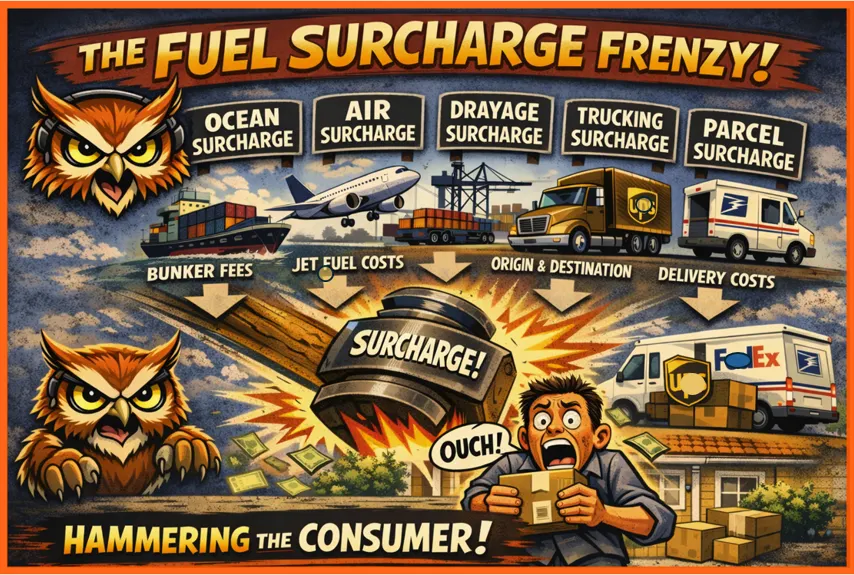
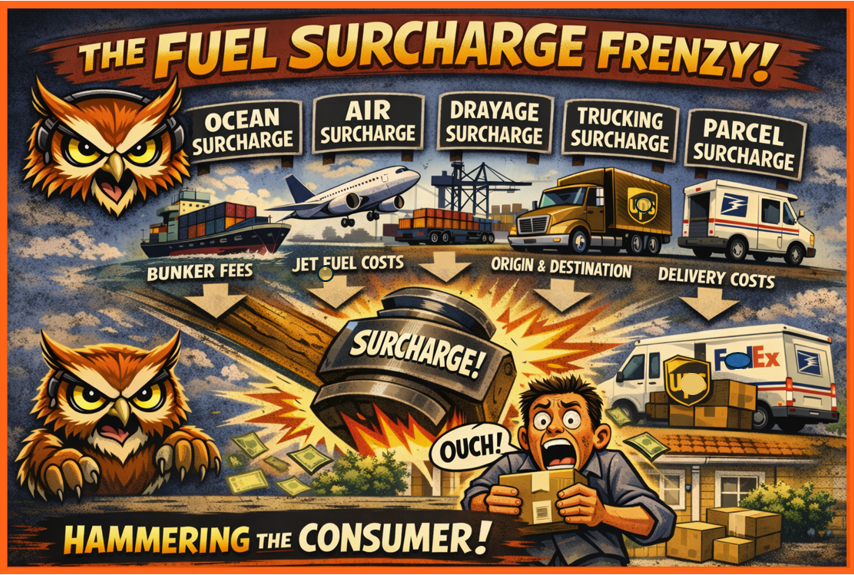

The Middle East is on fire. The Strait of Hormuz is shut down. Oil and gas flows are choked off. So yes, fuel costs are up. Everyone gets that.
But what is happening now looks less like cost recovery and more like a surcharge stampede.
From the shipper side, fuel matters. Ocean carriers burn bunker. Air carriers burn jet fuel. Draymen and truckers feel diesel swings fast. No serious transportation person argues otherwise.
Then the racket begins.
The same fuel spike gets charged over and over at every handoff. Ocean surcharge. Air surcharge. Origin dray surcharge. Destination dray surcharge. Truck surcharge. Parcel surcharge. Final-mile surcharge. By the time the product lands on a homeowner’s porch, one fuel event has turned into a chain-wide billing party.
And that last leg is where this gets especially suspect.
On parcel and final mile, fuel is only one part of cost. Labor, sorting, delivery density, terminals, handling, failed stops, tech, and overhead usually matter more. So, when carriers slap on loud, highly visible fuel surcharges, consumers have every right to wonder: is this really about fuel, or is fuel just the excuse?
That is the issue. Not whether fuel costs are real. They are. The issue is whether surcharges go beyond extra fuel cost and become an easy pass-through with margin tucked inside.
A fair surcharge should be clear, temporary, tied to a real index, and come down when fuel comes down. Too often we get the opposite: vague formulas, sticky fees, and “temporary” charges that never seem to leave.
My view - Passing through part of a real fuel spike is fair. Passing through all of it, all along the chain, look a lot like taking advantage of the end consumer!
See WOWL.io for newsletters
AndyG@WOWL.io

