
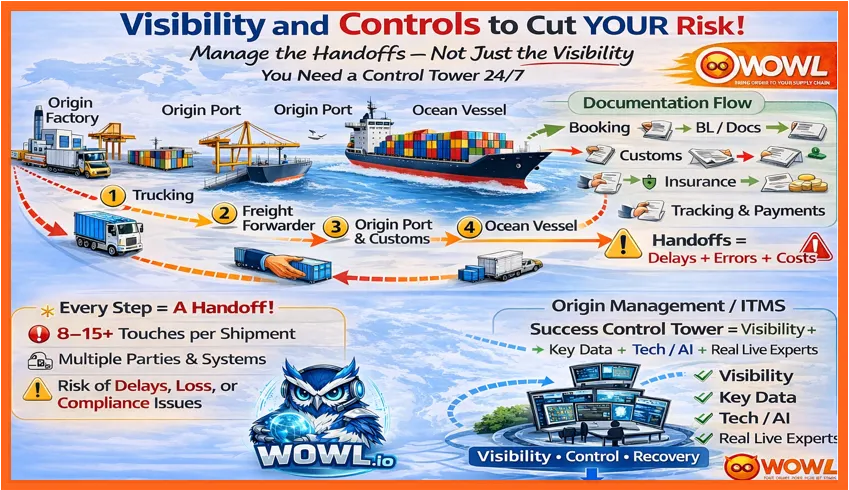
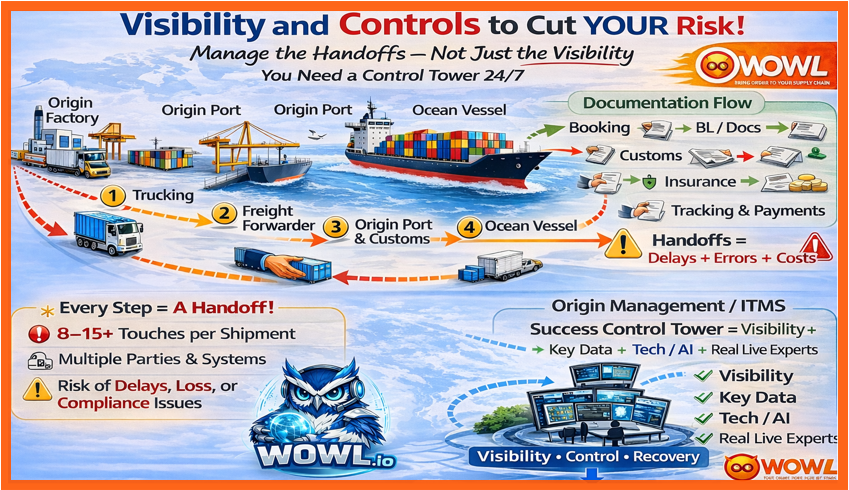
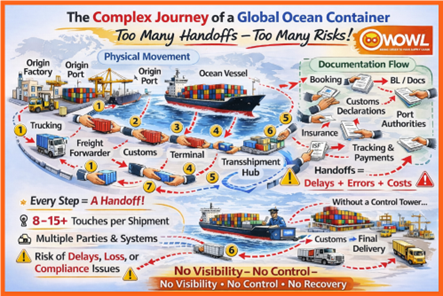
In global shipping, the biggest risk is not the ocean. It is the handoffs. One ocean container can pass through 12, 15, even 20 different providers before the final delivery.
That means too many parties touch the cargo or the documents, or just as critical, the data.
A trucker picks up the load. A shipper books it. Sets up the dray carrier, the dray trucker handles it. An ocean carrier sails it. A broker files customs. A drayman makes final delivery. Many others are between these key handoffs all along the way.
Every handoff creates another chance for something to go wrong. Everything has to stay in sync or else. That’s a problem!
That is where delays, fines, extra costs, and customer frustration begin. Too many providers. Too many handoffs. Too many chances for mistakes. The more broken the chain, the harder it is to stay in control.
In global shipping, the shipper ships and the consignee receive. The messy middle is where money leaks, service slips, and we all lose faith.
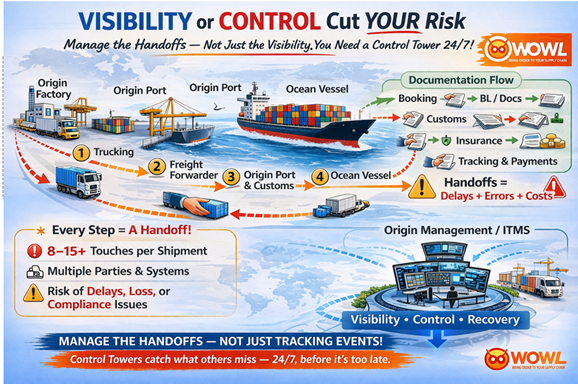
Visibility matters, but you need controls to adjust, fix, or improve a shipment while it is moving, or to make the next shipments run better.
It takes a control team that can act fast, think clearly, and solve problems 24/7. That is the role of a control tower. It can be internal, external, or a mix, but it has to be staffed by experts with AI tools and tech support who are already connected to your providers and key parties involved and can make smart decisions in real time.
Visibility shows you the problem. A control tower gives you the power to act on it. And in global shipping, action is what protects service, cost, and customer trust.
Test a WOWL solution? Sign on for a demo at WOWL.io
Andy G. AndyG@WOWL.io
#SupplyChain #GlobalLogistics #OceanFreight #Importers #BCO #ContainerShipping #SupplyChainVisibility #ControlTower #ShipmentVisibility #TransportationManagement

