



Blank sailings were once used mainly during holidays, weak demand, or major disruptions. Today, they are a standard carrier tool for managing capacity, controlling costs, and supporting freight rates.
Publicly posted Sea-Intelligence data for the first half of 2026 shows carriers removed roughly 10% to 14% of scheduled capacity across four major East–West trade lanes. This is no longer an occasional exception. It is part of the operating model.
For years, my teams built routing guides with planned carrier allocations. Shanghai to Los Angeles might be split 40% MSC, 40% Maersk, and 20% Evergreen. Results did not have to be exact, but we monitored booking acceptance, service, performance, and volume commitments. Problems were addressed during operating reviews and the next RFP.
That approach worked—but the guide alone is no longer enough.
Weather, port labor, equipment shortages, congestion, and vessel capacity have always disrupted shipping. Blank sailings add something different: the carrier deliberately removes a service the shipper expected to use.
One cancelled sailing can mean rolled cargo, another week of inventory exposure, missed customer deliveries, higher storage costs, or an expensive switch to another carrier or transport mode. Published transit time means little if the vessel never sails.
BCOs, importers, and shippers need active routing control—and better carrier measurement.
Carrier performance cannot be judged by a global average. A carrier may perform well from Shanghai to Los Angeles but poorly from Ningbo to Savannah. Another may offer the lowest rate but create more booking rejections, blank sailings, rolled containers, and late arrivals.
You must measure performance by your carriers and forwarders and hold them accountable.
Some Ideas on Tracking:
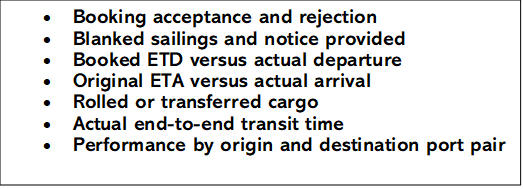
Over time, this data shows where each carrier creates value—and where they create cost and risk. It also gives shippers real evidence for quarterly reviews, allocation changes, and annual RFP decisions.
This is where a strong ITMS/Origin-Management platform, with an experienced operating team earn their keep. AI can monitor schedule changes, compare performance, and flag better options around the clock. Experienced operators can judge the trade-offs, shift bookings, and protect customer priorities.
While carriers are actively managing their capacity and their bottom-line, shippers must actively manage routing—and measure the results. Customers
Static routing guides are history. Dynamic routing control and carrier scorecards are now essential. You still must monitor the service you buy and push for success!
WOWL.io and request a demo to see how we do it!
#ITMS #OriginMgmt #OceanTransportation #BookingMgmt #GlobalLogistics

