
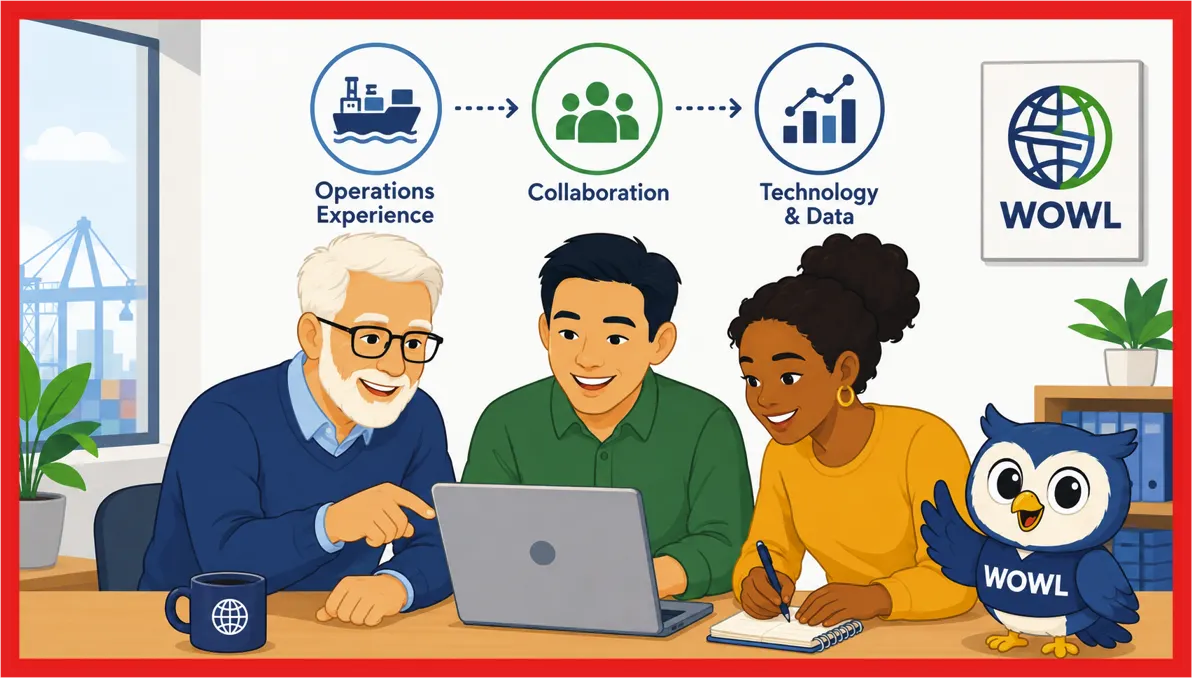
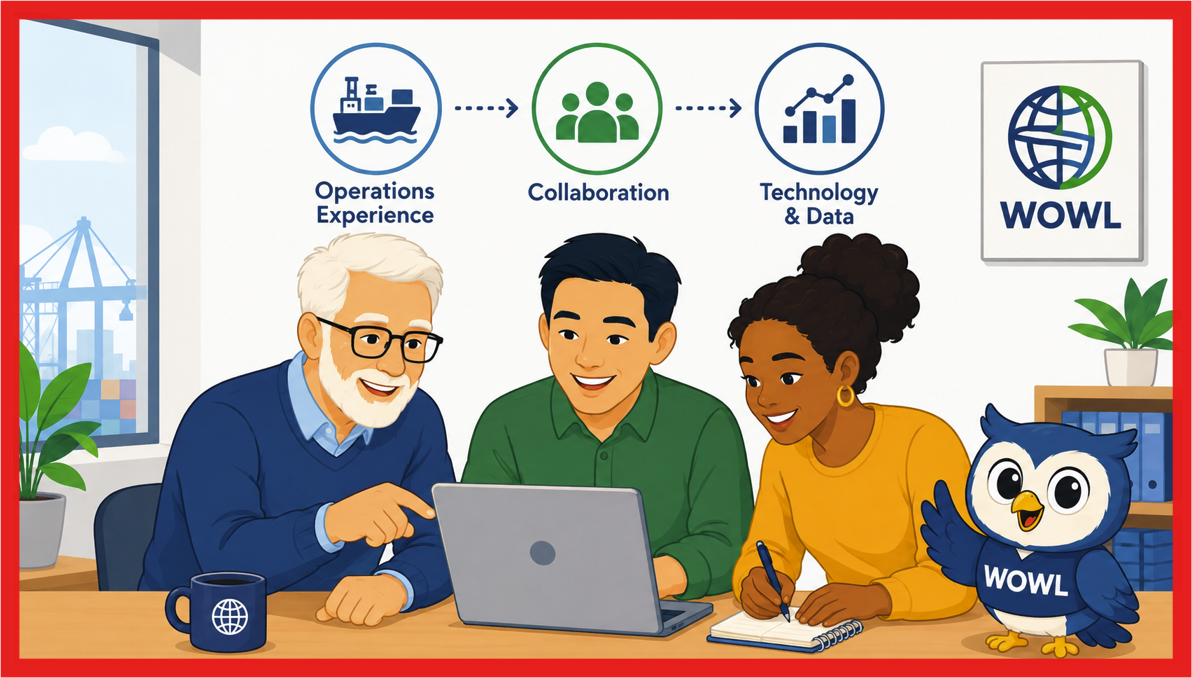

Being tech-savvy is not the same as being logistics-savvy.
Young logistics professionals bring something our industry desperately needs. They are comfortable with AI, Business Intelligence, automation, dashboards, APIs, and digital tools. They quickly embrace new technology and can help experienced teams work smarter.
That is a tremendous advantage.
But technology alone doesn't move freight.
A dashboard is not the operation. A rate quote is not a strategy. A visibility platform is not a guarantee. AI can find patterns, but it cannot yet replace operational judgment built through experience.
The real education comes from understanding why shipments fail, where costs hide, how providers perform, how suppliers create downstream problems, and how one small decision can ripple through an entire supply chain.
That knowledge is learned in operations—not just in classrooms.
Likewise, experienced logistics professionals have something equally important to learn. Today's technology can connect data from ERP systems, TMS, WMS, carriers, suppliers, customs brokers, ports, and financial systems to uncover opportunities that were nearly impossible to see just a few years ago.
The goal isn't more reports. It's better questions.
- Where are our cost leakages?
- Which providers consistently underperform?
- What exceptions create most of our customer problems?
- Which suppliers generate repeated delays?
Performance averages often hide the biggest opportunities. AI and Business Intelligence can quickly expose the few shipments, suppliers, lanes, or providers causing most of the pain. Fixing the worst performers often delivers greater value than making small improvements everywhere else.
Technology is only as good as the data behind it. Tomorrow's logistics leaders must also learn how to identify bad data, improve data quality, or quarantine unreliable information before making important decisions.
The future of logistics depends on two-way learning.
Experienced professionals should share operational knowledge, judgment, negotiation skills, and decades of lessons learned. Younger professionals should help organizations adopt new technology, better analytics, automation, and AI.
Neither group has all the answers. Mentoring goes both ways.
Together, they become a stronger team.
The companies that intentionally combine operational experience with technology expertise will develop logistics professionals who contribute sooner, solve problems faster, and lead with greater confidence.
The future of logistics won't be built by choosing between experience and technology. It will be built by bringing them together.
Find What Hides in your Averages: WOWL helps customers find what your averages hide. Work with us to connect logistics data, apply AI and Business Intelligence, and combine it with operational expertise. Uncover your profit leaks. Identify weak performers. Find the hidden bad performers.
WOWL.io for more information.
#ITMS #OriginMgmt #OceanTransportation #ContainerMgmt #Visibility

