
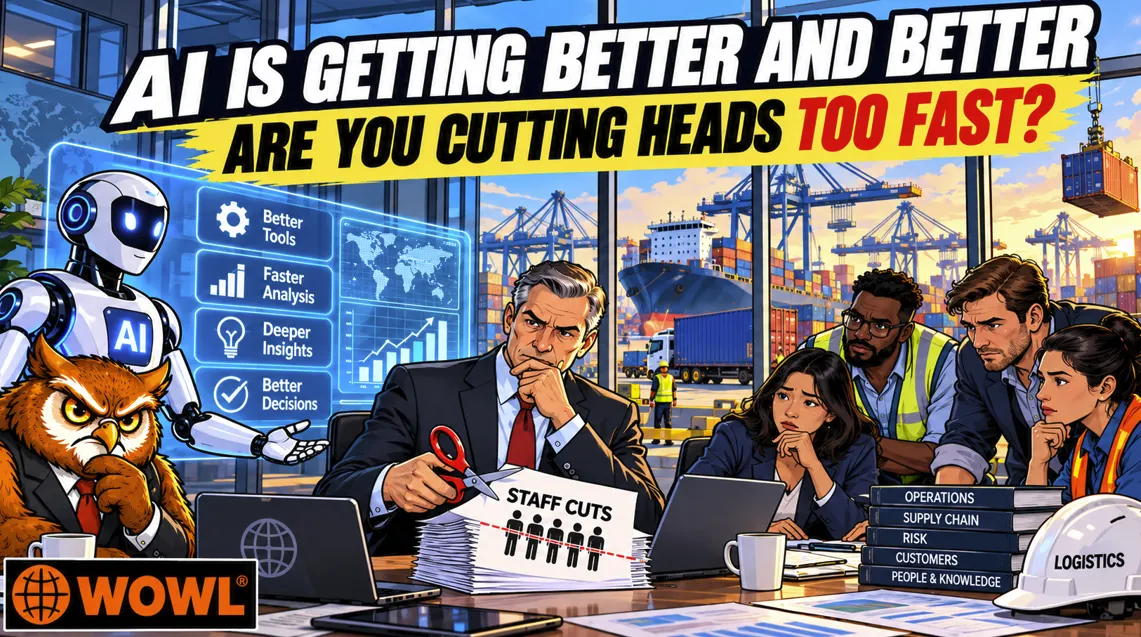

ChatGPT, Claude and other AI tools can research, summarize, analyze data, identify patterns, draft reports, compare options, and help us make decisions faster.
That is good news for us in Logistics, but does that mean a drastic cut of your team?
There is a risk.
Leadership teams are under pressure to show that AI investment produces savings. One of the fastest savings to put on a spreadsheet is headcount.
The logic sounds simple:
AI does more work. Therefore, we need fewer people.
Maybe!
But which work needs done? Which people? And how fast? Or maybe we should be doing more, deeper analysis, planning, and strategizing.
That is where companies get into trouble. And I have lived through it since truck deregulations in the early 1980’s and after.
Logistics is not just reports, spreadsheets, and shipment updates. It requires judgment.
Someone still needs to understand why a shipment is late. Why a carrier charge is wrong? Why a supplier keeps missing cutoff? Why detention costs jumped. Why one port pair performs better than another?
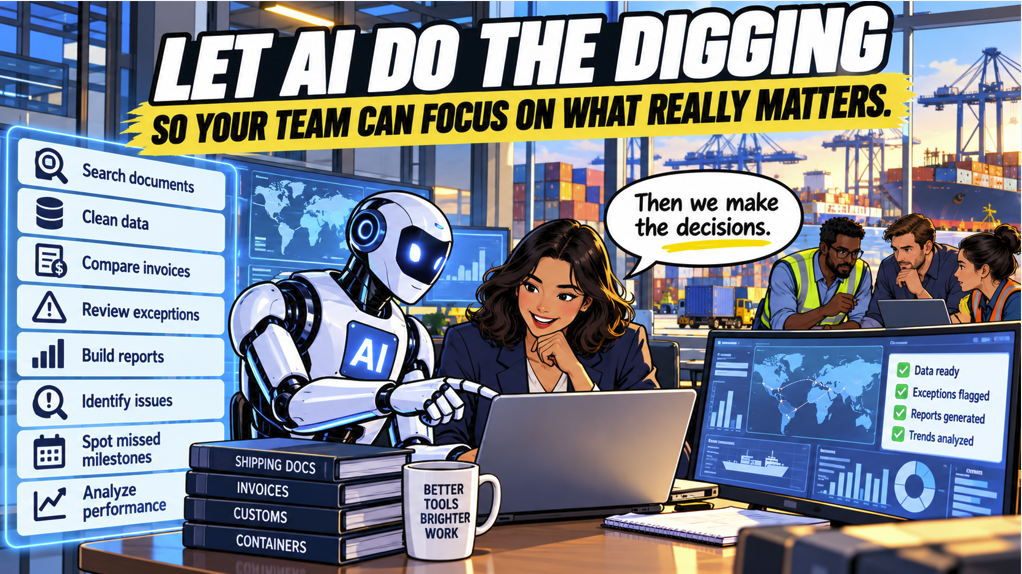
AI can help us find the problems faster. Identify issues. Dig deeper in the general average scores and metrics that look pretty good. Find the “devil” in the details.
A professional still needs to understand what the problem means, how to address it, and, using great AI tools, plan the next steps.
That is the key.
AI should attack repetitive, low-value work first.
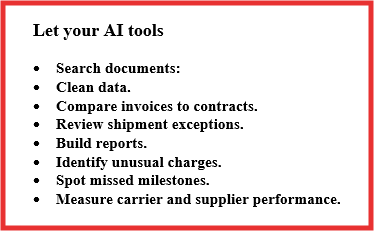
Use AI to do the digging. Point out the possible, hidden weak spots and failures.
Then let experienced logisticians make the decisions.
AI may tell us detention per diem costs increased 35%. But why?
Did the terminal delay pickup? Did the customer hold the container? Was free time poorly negotiated? Were the carriers’ invoices correct or not?
That requires knowledge and judgment as well as the AI evidence.
The danger comes when companies cut experienced people before capturing that knowledge.
Contracts. Freight classifications. Customs rules. Accessorial charges. Carrier behavior. Negotiations. Customer requirements. Operational history.
Once that knowledge walks out the door, getting it back is not easy.
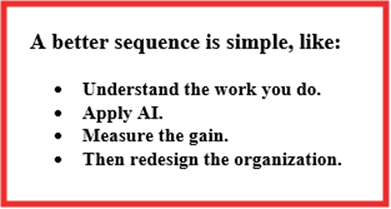
Do not swing the headcount axe first.
AI should replace searching, copying, repetitive reporting, routine comparisons, and hours spent finding problems.
It should free up professionals to spend more time managing cost, service, risk, carriers, suppliers, and customers.
That is where the real productivity gain sits.
Get all of our blog articles at WOWL.io

#AI #AIinLogistics #LogisticsTechnology #SupplyChainTechnology #LogisticsManagement #TransportationManagement #DigitalTransformation #LogisticsLeadership #SupplyChainInnovation #FreightManagement #WOWL

